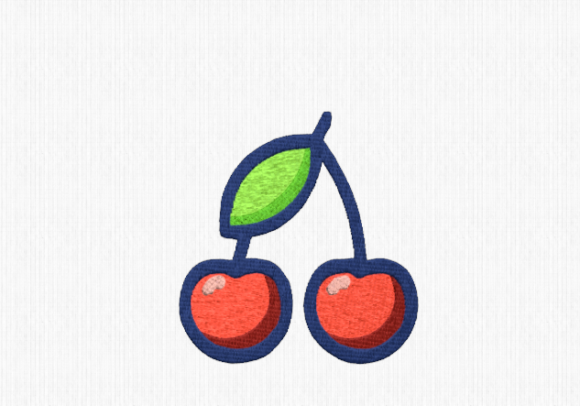
Cherries: A Bright, Cheerful Embroidery Design for Personalized Gifts
First Impressions: Sweet, Playful, and Instantly Inviting
Unzipping the Cherries embroidery file felt like opening a small box of candy—bright, cheerful, and full of personality. As an embroidery designer who’s tested hundreds of food-themed designs for gift shops and Etsy sellers, I was immediately drawn to how Cherries balances charm with clarity. It’s not overly fussy or hyper-realistic; instead, it leans into a friendly, hand-drawn sweetness—think ripe, glossy fruit with subtle shading and soft curves. The mood is undeniably playful, but not childish. It reads as timeless enough for a wedding keepsake, yet vibrant enough for a baby’s nursery towel or a custom tote bag at a craft fair.
Why Cherries Works So Well for Meaningful Personalized Gifts
This isn’t just another food embroidery—it’s a versatile emotional connector. For baby embroidery, Cherries adds gentle whimsy to a receiving blanket or onesie without leaning into clichés like apples or strawberries. Its round, symmetrical shape makes it ideal for centering on a pillow cover or monogrammed onesie—no awkward cropping or scaling needed. As a wedding gift, it brings a quiet, romantic nod to abundance and sweetness (think “cherish” and “cherries” in one). I’ve already sketched mockups of Cherries stitched onto linen napkins, embroidered towels with delicate script initials beside them, and even minimalist pillow covers for a rustic-chic bridal shower.
Small shop owners and Etsy sellers will appreciate how Cherries photographs beautifully—its contrast and shape pop on both light and dark backgrounds. That visual clarity translates directly to buyer engagement: customers scroll faster than ever, and Cherries stops them. It feels handmade, intentional, and warm—not mass-produced. That perceived quality lifts the entire finished product, whether it’s a $28 embroidered towel or a $95 heirloom blanket.
Where Cherries Shines—and Where to Pause
Cherries thrives on stable, medium-weight fabrics: cotton voile for nursery wall hangings, midweight linen for aprons, brushed cotton for baby blankets, and terry cloth for kitchen towels. On these surfaces, its stitch density delivers rich texture without stiffness. But—and this is critical—Cherries needs thoughtful placement on textured or challenging substrates.
- Thick towels: Test stabilizer layers first. A tear-away + cut-away combo prevents puckering around the stem and fruit curves.
- Stretchy baby clothes: Avoid tight-knit jersey unless you use a high-quality cut-away stabilizer and reduce top tension slightly. The design’s smooth outlines can distort if fabric shifts.
- Curved surfaces (like tote bag gussets or pillow corners): Hoop carefully—consider floating the fabric with adhesive stabilizer to keep the cherry shape true.
- Dark fabric: Always check thread color contrast. Light reds or pinks may fade visually; opt for deeper berry tones or add a white underlay for crispness.
- Frequent-wash items: Confirm your thread is polyester or rayon with high washfastness. The design’s charm relies on clean, consistent stitching—even after 20+ cycles.
Practical Embroidery Notes Every Maker Should Follow
Before stitching your first customer order with Cherries, treat it like any commercial embroidery launch: test, observe, refine.
- Always stitch a test on scrap fabric that matches your intended product—same weight, weave, and pre-wash status.
- Confirm hoop size compatibility. If your machine uses smaller hoops, verify whether Cherries fits comfortably or requires resizing (and whether that impacts detail integrity).
- Review stitch density. Too dense = stiff fabric; too sparse = loss of dimension. Look closely at the cherry highlights—they should read as soft glints, not jagged lines.
- Match stabilizer to fabric texture. Lightweight cut-away for knits, tear-away for stable wovens, and fusible + tear-away for towels.
- Compare light/dark fabric mockups. A printable mockup helps clients visualize before you stitch—especially important for Etsy sellers offering custom embroidery.
- Inspect small details post-stitch. Check the stem, leaf veins, and fruit sheen. Are they legible? Do they hold shape after trimming?
- Verify commercial licensing. Since Cherries is marketed as a machine embroidery design for personalized gifts, confirm it permits resale of finished products—this is non-negotiable for small business owners and digital embroidery file sellers.
Designing With Intention: Beyond the Stitch
What makes Cherries special isn’t just its visual appeal—it’s how easily it invites storytelling. A new parent sees nourishment and joy. A couple starting their life together sees shared sweetness. A kitchen lover sees freshness and care. That emotional resonance multiplies the perceived value of your handmade product. When you pair Cherries with thoughtful packaging—a handwritten note, a reusable cotton drawstring bag, or a branded tag—you’re not selling embroidery. You’re delivering meaning.
For Etsy sellers, this design is low-risk, high-reward: it’s compact enough for fast turnaround, distinctive enough to stand out in search (“cherry embroidery,” “food embroidery,” “baby fruit embroidery”), and flexible enough to slot into multiple best-selling categories—nursery decor, wedding favors, kitchen gifts, and gender-neutral baby items. And because it’s rooted in the Food category but executed with Embroidery artistry, it bridges practicality and personality in a way few designs do.
A Final Thought for Crafters and Small Business Owners
Not every embroidery file earns repeat use—but Cherries does. I’ve already added it to my go-to folder for baby embroidery bundles, wedding gift samplers, and seasonal Etsy listings (yes, it works year-round—not just in summer). It’s the kind of design that quietly builds trust: clean lines say “I pay attention,” balanced colors say “I care about harmony,” and its joyful spirit says “I made this for someone worth cherishing.”
If you're curating a collection of digital embroidery files for your small shop—or stitching custom orders for real people with real milestones—Cherries isn’t just another option. It’s a small, bright promise: that even the simplest fruit can carry warmth, memory, and meaning.