Cross with Leaves
First Impression: Delicate, Fresh, and Quietly Devotional
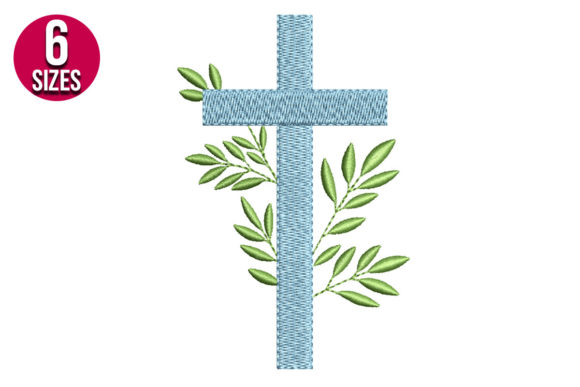
As an embroidery designer who’s prepped over 200 craft fair booths—and shipped thousands of finished products—I opened Cross with Leaves expecting something reverent but approachable. The title alone tells me this isn’t a bold liturgical emblem or a gothic statement piece. It’s delicate. Fresh. And that “floral cross” phrasing? That’s the key. This is faith expressed through botanical softness—not doctrine through geometry. It lands as elegant, not ornate; modern-minimal, not traditional-heavy. For handmade markets where shoppers lean into warmth and intentionality, Cross with Leaves feels like a quiet invitation—not a proclamation.
Where It Shines on Craft Fair Products
This design thrives where subtlety meets utility. On a natural linen tote bag design, it reads beautifully centered near the bottom hem—small enough to avoid overwhelming, large enough to catch light and movement. As apron embroidery, placed just above the pocket, it adds gentle personality without competing with stains or flour dust. For tea towel embroidery, it works best on lighter weaves (like cotton waffle or soft terry) where the floral lines stay crisp against texture. On dark or heavily textured towels? I’d skip it—too much risk of lost detail.
Embroidered patches are where Cross with Leaves becomes unexpectedly versatile. Stitched onto denim jackets, canvas market bags, or even kids’ backpacks, it softens edgy silhouettes while keeping its devotional heart intact. As a small pouch front accent or pillow cover focal point, it balances reverence and charm—ideal for boutique makers curating giftable handmade items that feel personal, not preachy.
What Holds It Back (and How to Work Around It)
Let’s be direct: Cross with Leaves is not a “throw-it-on-anything” design. Its delicacy means it struggles on high-curve surfaces like baseball caps—petals blur, leaf stems thin out, and stitch density can cause puckering without precise stabilizer pairing. Likewise, on thick fabrics (heavy twill, quilted cotton), fine floral elements may vanish unless you adjust underlay and reduce density in your machine embroidery software.
Small sizes are tricky. Below 3 inches wide, the inner leaf veins and cross grain can collapse into a muddy shape—especially on dark fabric where thread contrast fades. If you’re planning printable mockups for Etsy listings, test at 2.5”, 3”, and 4”. You’ll likely find 3.25”–3.75” is the sweet spot for clarity across most fabric types.
Photography, Perception, and Booth Impact
This design photographs exceptionally well—especially with natural light and neutral backdrops. Its organic lines lend themselves to lifestyle shots: draped over a ceramic mug, stitched on a folded tea towel beside fresh herbs, or pinned to a burlap banner at your booth. That visual softness translates directly to perceived value. Shoppers don’t see “religious embroidery”—they see *intentional craftsmanship*. That lifts your entire small shop product lineup, reinforcing handmade quality and thoughtful curation.
In person, Cross with Leaves stands out because it doesn’t shout. At a crowded craft fair, loud graphics fatigue the eye. This design breathes. Paired with a simple cream apron or oatmeal tote, it creates calm focus—drawing people in for a closer look, not a quick pass. That pause is where connection happens. And connection is where sales begin.
Production Realities Every Embroidery Designer Should Check
Before batching finished product, run these checks:
- Test on scrap fabric—not just the same fiber, but the exact weight and weave you’ll use. Linen behaves differently than cotton poplin, even if both are “lightweight.”
- Verify thread contrast—especially if stitching on ecru, oat, or charcoal. Some floral greens and browns disappear on mid-tones unless you swap to higher-contrast thread colors.
- Review spacing and underlay. Tight petal clusters need proper underlay to prevent gapping. If your machine embroidery design lacks built-in underlay, add it before hooping.
- Confirm hoop size and whether the design fits comfortably within your standard hoops—no last-minute re-hooping during fair prep.
- Inspect stitch density in tight areas (leaf tips, cross joints). Over-stitched zones trap moisture and wear faster on frequently washed items like tea towels or aprons.
- Use the right stabilizer: cutaway for knits and stretchy fabrics; tear-away for stable wovens; and a light fusible + tear-away combo for textured towels.
- Create at least one real mockup—not digital. See how it drapes, how light catches the stitches, how it feels in hand.
- Compare fabric colors side-by-side: ivory vs. natural vs. unbleached—each changes how the floral tones read.
- Confirm commercial licensing before selling any commercial embroidery item. Since the description says “can be used,” verify scope—personal use only? Small business? Unlimited units?
Final Thoughts for Etsy Sellers and Boutique Makers
Cross with Leaves isn’t just another digital embroidery file. It’s a mood, a moment, a quiet alignment between faith and flora. It performs strongest when paired with intentional product choices—not as filler, but as focal point. Think: a set of three embroidered tea towels (one with Cross with Leaves, two with coordinating leaf-only motifs), or a curated gift box with a linen pouch, a mini pillow cover, and a handwritten card explaining the symbolism.
For Etsy sellers, this design supports strong branding—especially if your shop leans into slow living, botanical themes, or mindful spirituality. It layers seamlessly into existing design assets without clashing. And because it’s not overly literal or seasonal, it stays relevant year-round: Easter, weddings, housewarmings, sympathy gifts, or simply “I love this cross” moments.
In short: Cross with Leaves is a smart, sellable, softly sacred addition to your craft fair product rotation—if you treat it with the care its delicacy demands. Respect the details, test thoroughly, and let its quiet elegance do the talking. Your booth—and your buyers—will thank you.