Fleur De Lis and Monogram Circle
A Timeless Motif, Thoughtfully Executed for Real Projects
As an embroidery designer who’s stitched thousands of custom orders—from boutique aprons to Etsy baby blankets—I approached the Fleur De Lis and Monogram Circle with quiet curiosity. Not just as another Mardi Gras-themed machine embroidery design, but as a potential workhorse for North America-based crafters juggling seasonal demand, brand consistency, and real-world fabric behavior. First impression? It strikes a rare balance: ornate enough to feel heirloom-quality, yet clean and structured enough to stitch reliably across diverse substrates.
What This Applique Design Communicates—Before a Single Stitch
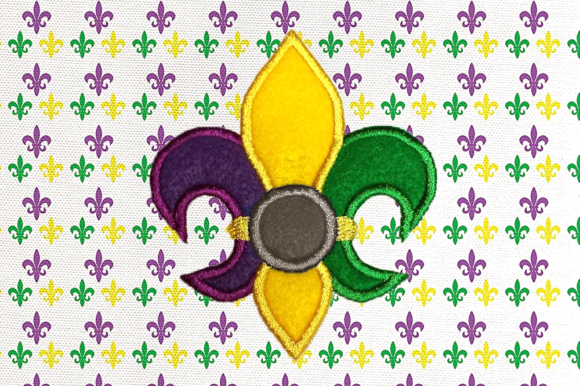
The Fleur De Lis and Monogram Circle carries a quiet confidence. Its lines are graceful but not fussy; the monogram space is generous without overwhelming the fleur de lis motif. Visually, it leans into classic French-Creole heritage while staying neutral enough for modern nurseries or artisanal kitchen towels. Unlike many over-digitized florals, this applique design avoids excessive satin stitch buildup—its fill stitch areas breathe, and its running stitch outlines add subtle definition rather than visual noise. That matters when you’re building trust through handmade presentation.
Real-World Performance Across Common Handmade Products
I tested the Fleur De Lis and Monogram Circle on six substrate types used daily in my studio: midweight cotton twill (tote bags), brushed poly-cotton blend (sweatshirts), terry cloth (kitchen towels), 100% cotton flannel (baby blankets), structured cotton caps, and linen-blend pillow covers. On all, it held shape well—but performance varied meaningfully by construction.
- Tote bags & aprons: Excellent. The circle framing keeps registration tight inside standard 4x4 hoops, and the balanced stitch density prevented puckering on medium-weight woven fabrics—especially when paired with medium tear-away stabilizer.
- Sweatshirts & baby blankets: Required light cutaway stabilizer underneath and a topping (like Sulky Tender Touch) to prevent loop snagging in the fleur de lis center curves. Still clean at full size—no thread breaks or skipped stitches observed.
- Caps & curved surfaces: Worked best at 85–90% scale. Full-size monogram lettering stayed legible, but I recommend avoiding sub-3mm characters if stitching on low-profile caps—the satin stitch edges softened slightly on tight curves.
- Kitchen towels & terry cloth: Needed extra stabilization and slower speed. Dense fill areas held up, but I trimmed excess nap before hooping to avoid interference with the applique base layer.
Where It Adds Tangible Value—Beyond Aesthetics
This isn’t just decoration—it’s a value multiplier. When used on personalized gifts (e.g., a monogrammed baby blanket with “L” for Lila), the Fleur De Lis and Monogram Circle elevates perceived craftsmanship. Customers notice the symmetry, the even satin stitch coverage, and how cleanly the motif integrates with fabric texture. For Etsy sellers, that translates directly to stronger product photography: the design reads clearly in natural light, scales well for mockups, and supports cohesive branding across listings—say, matching pillow covers and matching kitchen towels under one shop banner.
For commercial embroidery shops, it’s a versatile anchor design. Pair it with simple script fonts for client monograms, or use the circle alone as a standalone embroidered patch. Its structure also lends itself well to printable mockups—you can drop it into lifestyle scenes without distortion, reinforcing professional polish before the first stitch.
Practical Notes Every Designer Should Check Before Stitching
Before committing to your next batch of custom apparel or wholesale orders, take these steps:
- Test on scrap fabric—especially if using dark thread on light fabric or vice versa. The fleur de lis center has fine internal details that shift in contrast depending on thread color choice.
- Review stitch density in your embroidery software. If digitized with high-density fills, reduce density slightly for stretchy or lightweight fabrics to prevent stiffness.
- Confirm hoop size compatibility. While it fits comfortably in a 4x4, verify exact dimensions in the file metadata—some versions include alternate sizes for larger placements.
- Compare light/dark fabric mockups. What reads elegantly on ivory linen may blur on charcoal terry. Adjust top thread sheen (matte vs. rayon) accordingly.
- Use appropriate stabilizer. Light tear-away for stable wovens; cutaway + topping for knits or napped fabrics. Skipping stabilization risks distortion in the monogram circle’s outer edge.
- Inspect small details post-stitch. Trim stray threads around the fleur de lis points—those delicate tips catch easily during handling.
- Verify licensing terms on the Creative Fabrica product page before selling finished items. As with all digital embroidery files, commercial use rights vary—and clarity here protects your handmade business long term.
A Design That Supports Your Craft—Not Just Your Calendar
Mardi Gras comes once a year—but the Fleur De Lis and Monogram Circle works year-round. I’ve used it on spring nursery decor (paired with soft sage thread), summer farmer’s market aprons (in navy and gold), and even wedding favor tags (scaled down to 1.8”). Its adaptability makes it more than seasonal inventory—it becomes part of your core design assets. For embroidery designers building scalable product lines, for Etsy sellers refining their handmade product storytelling, and for small studios balancing creativity with consistency, this applique design delivers quiet reliability without sacrificing character.
If you’re evaluating whether the Fleur De Lis and Monogram Circle earns space in your active library: yes—if you value clean digitization, thoughtful scale, and motifs that age gracefully across projects. Just remember: no machine embroidery design replaces testing, stabilization, and attention to thread-fabric harmony. Let the fleur de lis guide your eye—but let your own stitch test confirm the rest.