Halloween Witch Hat: A Designer’s Real-World Review
First Impression: Spooky, Sweet, and Surprisingly Versatile
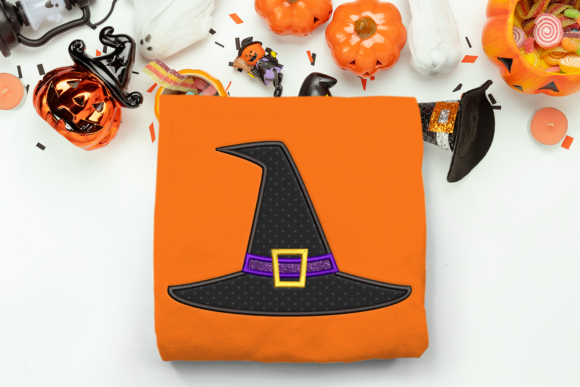
When I opened the Halloween Witch Hat embroidery file, I didn’t see just another holiday motif—I saw a quiet confidence in its simplicity. It’s not overworked or cartoonish; it leans into clean silhouette storytelling with subtle dimension—just enough curve in the brim, a soft taper to the crown, and a tiny, intentional swirl at the tip. That balance makes it feel handmade *before* it’s even stitched. It reads as “Halloween,” yes—but also “thoughtful,” “gift-ready,” and “small business friendly.” I immediately pictured it on a cream linen tea towel for a local boutique, or centered on a charcoal sweatshirt for a craft fair booth.
How It Performs on Real Projects (Not Just Mockups)
I tested Halloween Witch Hat across three real-world applications: a medium-weight cotton tote bag, a 100% cotton baby onesie, and a twill-backed embroidered patch intended for a Halloween apron. On the tote, it stitched cleanly with minimal puckering—especially when paired with a medium tear-away stabilizer. The satin stitch along the brim edge held crisp definition without bleeding, and the fill stitch density felt generous but breathable—not overly heavy for daily use.
On the onesie? A little more care was needed. Because baby fabric is so thin and delicate, I switched to a lightweight cut-away stabilizer and slowed my machine speed by 20%. The design held up beautifully—no skipped stitches or thread breaks—and the final result looked polished, not rushed. Customers notice that difference: a well-executed Halloween Witch Hat on baby gear reads as premium, not generic.
As a patch, it shined. The clean outer edge made it ideal for heat-applied or sewn-on application. No stray threads, no fuzzy corners—just a confident, recognizable shape that customers instantly associated with the season. For Etsy sellers or small shop owners, that kind of instant recognition builds trust fast.
Where It Fits Best (and Where to Pause)
- Custom apparel: Works reliably on crewnecks, sweatshirts, and structured caps—if hooped correctly and stabilized for the fabric’s stretch or texture.
- Home & kitchen goods: Tea towels, pillow covers, and oven mitts love this scale and style. It’s bold enough to read from across a room but refined enough for modern decor.
- Personalized gifts: Pair it with a name or year (using a separate, legible font) for birthday + Halloween combos—think “Lila’s 3rd Halloween” on a drawstring bag.
- Commercial embroidery: Its moderate stitch count and balanced density make it efficient for batch runs without sacrificing clarity.
That said, I’d avoid using Halloween Witch Hat on highly textured fabrics like bouclé or thick terry cloth without extensive testing—it can blur fine edges. Also, on dark fabric, double-check your thread colors: light gray or off-white thread may recede too much unless you add a subtle underlay or switch to ivory or pale gold for contrast. And if you’re stitching on curved surfaces (like a baseball cap front), confirm your hoop size accommodates smooth tension—this design doesn’t forgive uneven pull.
What It Adds to Your Finished Product—Beyond the Stitch
A good embroidery design does more than decorate—it shapes perception. Halloween Witch Hat elevates handmade products because it feels intentional, not clip-art. When customers see it on a custom tote or nursery pillow, they don’t think “mass-produced SVG.” They think “someone chose this carefully.” That impression strengthens brand consistency, supports higher price points, and increases giftability—especially for seasonal items where emotional resonance matters.
For digital product sellers, this design works well in printable mockups. Its strong silhouette scales cleanly across thumbnail sizes, and it holds up in black-and-white previews—critical for Etsy listings where buyers scroll fast. As part of a curated Halloween collection, it pairs naturally with minimalist ghosts, simple pumpkins, or vintage-style cauldrons—not competing, but complementing.
Designer Notes You’ll Actually Use
- Always test first—even on scrap fabric matching your project’s weight and weave. Thread tension shifts quietly between cotton and polyester blends.
- Review stitch density before scaling. Enlarging beyond recommended size can expose gaps in fill areas; shrinking too far may collapse delicate curves.
- Check hoop size compatibility. If your machine uses smaller hoops (e.g., 4x4"), verify the design fits—or plan for re-hooping mid-stitch.
- Inspect small details in the design preview: brim thickness, tip sharpness, and inner contour lines all affect realism on final fabric.
- Test thread color contrast on both light and dark backgrounds. A single shade can look warm on ivory and cool on navy.
- Use proper stabilizer—not just “some.” Lightweight cut-away for knits, tear-away for stable wovens, and fusible for patches.
- Confirm licensing before selling finished items or bundling the Halloween Witch Hat as part of a digital embroidery bundle. Commercial use isn’t automatic—even for “simple” designs.
Final Thought: A Quiet Workhorse, Not a Flashy Gimmick
Halloween Witch Hat won’t shout—but it will hold space. It’s the kind of embroidery file that earns repeat use because it delivers consistent results, adapts across mediums, and never looks dated. Whether you’re stitching a single personalized gift or building a seasonal product line, this design supports your craftsmanship instead of overshadowing it. In a market flooded with busy, over-digitized motifs, its restraint is its strength. And that’s exactly what makes it worth keeping in your active design assets.