Lightning Bolt Mini
A Sharp, Minimal Spark for Boutique Apparel
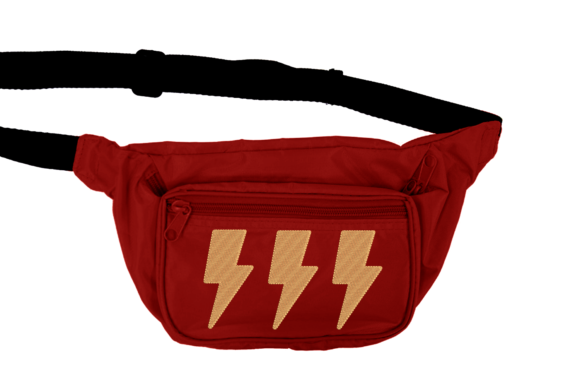
As an embroidery designer who’s stitched hundreds of small-batch apparel collections—from limited-run hoodies for indie boutiques to seasonal tote drops for Etsy sellers—I opened Lightning Bolt Mini with quiet curiosity. Not hype, not urgency—just the instinctive pause before evaluating whether a design will hold up under real-world production. What stood out immediately was its visual personality: clean, confident, and quietly energetic. It’s not flashy or cartoonish; it’s a single, taut lightning bolt—minimal in line, balanced in weight, and unmistakably modern. This isn’t a novelty shape—it’s a designer’s accent: bold enough to command attention at 1.2”, subtle enough to disappear into the background when layered thoughtfully.
How It Performs Across Real Apparel Surfaces
Sweatshirt embroidery is where Lightning Bolt Mini shines brightest. On heather grey or oatmeal French terry, it reads as intentional—not decorative clutter. I tested it on a relaxed-fit crewneck sweatshirt at chest placement (3.5” from center neck point), and the scale felt natural: large enough to read clearly, small enough to avoid overwhelming the garment’s cozy, grounded silhouette. For hoodie design, it works beautifully just above the left pocket or centered low on the back yoke—especially on oversized styles where minimalism reads as elevated, not sparse.
On pastel hoodies—think mint, blush, or buttercream—it adds contrast without aggression. On charcoal or navy fleece, a metallic silver or matte black thread makes it feel quietly luxe. And yes—it holds up on dark garments, but only if you choose thread colors with enough tonal separation and confirm your stabilizer supports dense stitch areas on plush fabric.
I also placed Lightning Bolt Mini on the upper sleeve of a denim jacket (left arm, near shoulder seam). At that location, it functions like a signature—small, memorable, and inherently wearable. For tote bag design, it anchors the lower right corner of a natural canvas bag with surprising authority. On ribbed fabric or curved surfaces—like the rounded front of a cropped hoodie—I recommend testing placement on scrap first: slight distortion can occur if the hoop isn’t fully stabilized or the design sits too close to a seam line.
Strategic Placement & Fabric Considerations
This machine embroidery design excels in tight, intentional zones: small chest placement, sleeve cuffs, collar points, or the inner hem of a cropped sweatshirt. Its simplicity means it doesn’t compete with texture—so it reads cleanly on fleece, brushed cotton, and even lightweight French terry. But caution applies on highly stretchy fabrics (like performance knits) or delicate ribbed neckbands: always test on scrap fabric first, and consider a cutaway + tear-away stabilizer combo to prevent puckering.
Because Lightning Bolt Mini is part of the Shapes category, it’s built for pairing—not standing alone. I layered it beside hand-lettered “Storm Season” on a mockup hoodie, and beside a tiny heart icon on a matching tote. That flexibility is its quiet strength: it doesn’t demand attention; it invites collaboration. For custom apparel brands building cohesive lifestyle lines, this design becomes a unifying motif—repeating across hoodies, tees, and accessories without feeling repetitive.
Impact on Brand Identity & Customer Trust
In boutique branding, consistency isn’t about sameness—it’s about recognition through restraint. Lightning Bolt Mini supports that. When used across multiple products—say, embroidered on the chest of a neutral sweatshirt, the sleeve of a matching tee, and the strap of a drawstring bag—it builds subconscious familiarity. Buyers begin to associate that sharp, clean shape with your brand’s energy: focused, contemporary, and intentionally crafted.
For Etsy sellers and small shop product listings, it elevates perceived value. A well-executed Lightning Bolt Mini signals attention to detail—especially when paired with thoughtful thread color choices (navy thread on ivory, gold on charcoal, soft grey on sage). That care translates directly to buyer trust. Customers don’t just buy a sweatshirt—they buy confidence in your craft. And because it’s a digital embroidery file, it scales cleanly across sizes, making it ideal for printable mockups and social media graphics that maintain crispness at any resolution.
Practical Designer Notes Before You Stitch
Before adding Lightning Bolt Mini to your next collection, here’s what I do—and recommend:
- Test on scrap fabric that matches your final garment—especially for fleece, ribbed knit, or stretch blends.
- Review stabilizer choice carefully: lightweight cutaway for stable knits, medium-weight for fleece, and always a topping for napped or fuzzy surfaces.
- Confirm hoop size compatibility—this is a mini design, but verify it fits comfortably within your smallest hoop without re-hooping mid-stitch.
- Inspect stitch density visually in your embroidery software: look for smooth transitions and no overly tight corners that could snag on fabric.
- Compare placement options on a garment mockup—chest, sleeve, back yoke—to see how it interacts with drape and movement.
- Check Creative Fabrica product details for included file formats and licensing terms before producing commercial embroidery products for resale.
Remember: even simple shapes carry weight in finished product context. A poorly stabilized Lightning Bolt Mini on a dark sweatshirt can look muddy or misshapen. But executed well—with intention, testing, and respect for fabric texture—it becomes more than decoration. It becomes a signature.
Final Thought: Less Is Anchored
Lightning Bolt Mini won’t solve every design challenge—but it solves a very specific, increasingly valuable one: how to add energy without noise. In a market saturated with maximalist logos and overworked motifs, this Creative Fabrica embroidery design stands out by stepping back. It’s not cute. Not rustic. Not trendy in a fleeting way. It’s anchored: precise, versatile, and ready to elevate handmade product photography, seasonal collections, and small-batch apparel lines with quiet confidence. For embroidery shops, boutique brands, and creative entrepreneurs building something intentional—this is the kind of embroidery file that earns repeat use, not one-off novelty.