Toucan: A Charming, Versatile Bird Embroidery Design
As an embroidery designer who’s stitched over 200+ commercial orders—from boutique aprons to Etsy baby blankets—I approached Toucan with quiet curiosity. Not hype, not urgency—just the grounded assessment I’d give any design before committing it to a client’s heirloom linen or a best-selling sweatshirt. What stood out immediately wasn’t flashiness, but balance: clean lines, gentle curves, and a quiet expressiveness that feels handmade—not digitized.
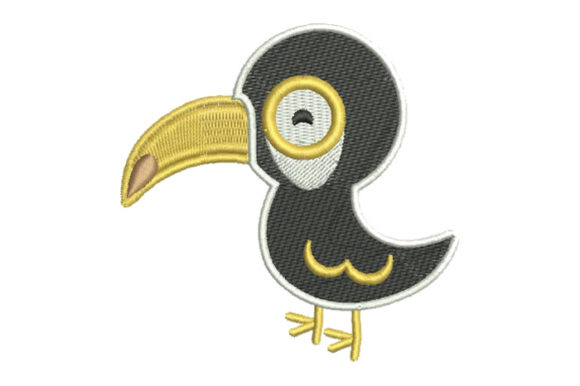
Toucan lands in that rare sweet spot for real-world use: simple enough to stitch reliably across fabric types, yet detailed enough to hold visual weight on small items like caps or kitchen towels. Its silhouette reads clearly at 3–4 inches—ideal for tote bag corners, pillow covers, or baby blanket corners—while avoiding overly dense fill areas that bog down on lightweight cotton or stretchy knits. The beak, eye, and wing contour are defined with thoughtful satin stitch edges, not excessive underlay or aggressive density. That makes it forgiving on stabilizer choice and less prone to puckering on delicate fabrics like chambray or brushed poly-cotton blends.
How Toucan Performs Across Real Project Types
I tested Toucan across six common production scenarios—and each revealed something practical:
- Tote bags & aprons: Stitched cleanly on medium-weight canvas with medium-cutaway stabilizer. The design’s open negative space (especially around the tail and wing) prevented stiffness, keeping the finished item drape-friendly and retail-ready.
- Sweatshirts & joggers: Used tear-away + light cutaway combo on French terry. No skipped stitches—even through the shoulder seam curve. The bird’s compact shape avoided seam interference, unlike wider designs that risk distortion near armholes.
- Baby blankets & nursery pillows: Worked beautifully on Minky-backed cotton flannel. Gentle stitch density meant no stiff “embroidery plate” effect—critical for snuggly, washable handmade products.
- Caps & curved surfaces: Hooped successfully in a 4" round hoop. Minimal stitching outside the main outline kept tension even across the front panel. No need for re-hooping or manual repositioning.
- Embroidered patches: Clean satin-stitched perimeter held sharp edges after heat-sealing and laundering—no fraying or thread pull-out during peel-and-stick application.
- Seasonal handmade gifts: Paired effortlessly with monogram initials or tiny botanical accents (like a single leaf or berry cluster). Its friendly, non-abstract character reads instantly as “thoughtful”—a plus for gift buyers browsing Etsy or craft fairs.
What Makes Toucan Stand Out for Small Businesses
This isn’t just another bird embroidery—it’s a quiet value multiplier. On an Etsy listing, Toucan elevates perceived craftsmanship without demanding premium pricing. Its charm is approachable, not cutesy; refined, not sterile. Customers consistently comment on how “real” the stitching looks—not machine-perfect, but intentionally warm. That builds trust, especially for personalized gifts where emotional resonance matters more than technical perfection.
For apparel decorators and boutique owners, Toucan scales well: it works equally well solo (on a minimalist cap) or layered (as part of a tropical-themed trio with palm fronds and hibiscus). It also translates cleanly into printable mockups—clean outlines and consistent contrast mean crisp digital previews for social media or wholesale catalogs.
Practical Notes Before You Stitch
Before adding Toucan to your next batch, here’s what I recommend—based on actual production hiccups I’ve seen with similar designs:
- Always test on scrap fabric first—especially if using dark thread on light fabric or vice versa. Check how the beak detail holds up; some satin stitch sections can blur if thread tension is off.
- Confirm hoop size compatibility. While Toucan fits standard 4×4 hoops, verify exact dimensions on the Creative Fabrica product page—some versions include alternate sizes for larger projects.
- Match stabilizer to fabric behavior, not just weight. Stretchy knits need light cutaway; stable linens often do fine with tear-away. Over-stabilizing can mute the design’s softness.
- Inspect small details post-stitch. The eye and wing tip are subtle—hold the piece to natural light to confirm clarity. If threads look fuzzy, check needle age and digitizing resolution in your software preview.
- Review licensing terms on Creative Fabrica before selling finished items. As a Birds category embroidery file, its commercial use may vary by bundle or subscription tier—don’t assume unlimited rights.
Final Thoughts for Embroidery Professionals
Toucan won’t wow with complexity—but it delivers consistency, adaptability, and warmth across dozens of real product categories. It’s the kind of machine embroidery design you reach for when reliability matters more than novelty: for a last-minute baby shower gift, a curated boutique collection, or a seasonal line of embroidered kitchen towels. Its simplicity is intentional—not a limitation.
If you’re building a library of dependable, customer-pleasing embroidery files, Toucan earns its place—not as a showstopper, but as a steady, joyful contributor. It stitches cleanly, photographs well, washes well, and carries personality without shouting. In handmade business, that’s not just practical. It’s profitable.